Sunday, September 7, 2014

The Harlem Hellfighters

The Harlem HellfightersThe Harlem Hellfighters by Max Brooks
My rating: 4 of 5 stars

Bringing to light a forgotten regiment of African-American heroes, this graphic novel depicts the horror of World War I and the courage of a group of men who had every deck stacked against them.

The 396th Infantry Regiment, and all-black regiment, was sent to training and to war with one hand figuratively tied behind their backs. They were actively belittled and attacked by their own countrymen, isolated from the other American troops, and even had to resort to trickery to get the weapons they needed from the U.S. Army.

But they returned after seeing more time in the soul-shredding combat of World War I than any other unit (the machine gun was a new invention, as was mustard gas), and after receiving more decorations. They never lost a man to capture.

This black and white graphic novel briefly sketches the characters of men both real and fictional. In color the illustrations would be too gory, but the drawback is that sometimes Caanan White's realistic, detailed images are difficult to understand. There is no denying, though, the emotional power of this story of men fighting both racism and a brutal war.

Max Brooks also wrote The Zombie Survival Guide and World War Z. For more on the history of this remarkable regiment, check out Walter Dean Myers' and Bill Miles' The Harlem Hellfighters: When Pride Met Courage.

Quotable:

"The first country in the world brave enough to be built on nothing but ideals...Even if it wasn't quite ready to live up to them." - p. 221

Wednesday, July 9, 2014

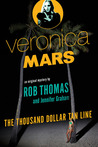
The Thousand-Dollar Tan Line

The Thousand-Dollar Tan Line (Veronica Mars, #1)The Thousand-Dollar Tan Line by Rob Thomas and Jennifer Graham
My rating: 4 of 5 stars

The case of a girl gone missing over spring break gets darker - and more personal - than private detective Veronica Mars ever expected.

Ah, Veronica Mars. My absolute favorite blonde detective (and I grew up reading Nancy Drew, though Nancy's hair is technically "titian" or "strawberry" blonde, bless her).

The first season of Veronica Mars was everything I wanted in a mystery series - smart, funny, dark, cynical, angsty, with compelling story arcs and interesting side characters. Also, it helps that the leads are all incredibly sexy, together and apart, with mad chemistry. They are epic. (Then the show got Pizzed on in Season 3 and cancelled. But I digress.)

Both so lovely. Amirite?
The Thousand-Dollar Tan Line is a novel that picks up where the Kickstarter-funded movie left off, with Veronica on her first major case since returning to Neptune, California. For super fans like me, it's a pleasure seeing Veronica navigate her old stomping grounds again. As a stand-alone novel, those not familiar with the series may be left in the dark. There's a lot of backstory there from three seasons of television, which thankfully the writers remember, plus you'll meet all your favorite characters again. (Except there's one detail overlooked by both book and series that has always bothered me: the check Veronica's mom stole. I mean, a missing $10,000 never gets mentioned again? Keith and Veronica never go after Lianne to reclaim the money? C'mon.)

A few new details keep it the Mars world fresh: while taking notes during interviews, Veronica mostly sticks to snarky asides about the interviewees, since her memory is excellent. She remains our morally tarnished but true-hearted heroine, a twist on the Sam Spade character. She is weighing her radical decision to return to Neptune instead of making big bucks as a lawyer, a choice that has strained her normally close relationship with her father.

And the story? It's Neptune's usual mixture of drugs, sex, and too much money, sprinkled with a generous heaping of police corruption thanks to the new Sheriff Lamb (who manages to make his deceased little brother look like a supercop). Ultimately I can't be objective about this book - I was just too happy to get back to Neptune to watch Veronica work her black magic.

There is a second book in this series, Mr. Kiss and Tell, to be released in late October. I've already pre-ordered it, and plan on reading it instantly with the deep hope that there is more Logan drama in store. I dig the naval dress whites, but the bad boy's still in there too, right?

Spoilerish: The wrap-up is smart and cynical, true to the V. Mars franchise. I for one appreciate seeing Veronica's empathy and sense of justice, though I have always been interested by the consequences of the vengeful side of her nature. I also love when the seemingly stereotypical poor innocent female victim is shown to have a lot of agency of her own.

Monday, March 31, 2014

Old Mr. Flood

Old Mr. FloodOld Mr. Flood by Joseph Mitchell
My rating: 5 of 5 stars

Old Mr. Flood is determined to live to 115 on his steady diet of whiskey, oysters, and good stories in these wonderful New Yorker pieces.

This book makes me so sad that the only "oysters" near me are the Rocky Mountain kind (and yes, I've tried them - deep-fried). When I lived in Seattle, a few friends and I made a day trip to Quilcene to go oyster hunting. I had never eaten an oyster before, and was unsure I would enjoy the taste or the texture. Raw shellfish? What? But being a fan of sushi (shout-out to Baek Chun Sushi, the most amazing sushi I've ever had, believe it or not), I decided to give oysters a chance.

My friends and I went out in our boots in the oily tidal flat mud, gathered up a number of thick knobby shells in a bucket, and went back to the beach to pry them open. All we had - and all we needed - was Sriracha and lemon juice. We cracked the oysters open in the cool winter sunshine and slurped them out of their brine, discarding the empty shells on the beach. The oysters, as it happened, were sublime. I have dreams about those oysters.

I'm with the Walrus.

But I won't eat seafood in a state with no ocean view; no oysters for me in Colorado.

So when I read about Old Mr. Flood in one of my favorite book blogs, I immediately bought it on my Nook. It's made up of three short New Yorker pieces from 1948, basically character studies of a vigorous old man named - you guessed it - Mr. Flood. Obsessed with living to 115 on his diet of seafood and whiskey, he tells stories to the narrator and is pretty much great at being an old man, living the good life.

Coming straight from An Unnecessary Woman by Rabih Alameddine, I was ready for another lovely character study, despite the fact that I'm normally only hooked by a fast-paced story. But these pieces made me willing to also check out more of Joseph Mitchell's collected short stories about the denizens of New York City: Up in the Old Hotel.

I lift my glass of 12-year Scotch to you, Mr. Flood, and to you, Mr. Mitchell. SlΓ‘inte.

Quotable:

"Ask the man for half a lemon, poke it a time or two to free the juice, and squeeze it over the oysters. And the first one he knifes, pick it up and smell it, the way you'd smell a rose, or a shot of brandy. That briny, seaweedy fragrance will clear your head; it'll make your blood run faster. And don't just eat six; take your time and eat a dozen, eat two dozen, eat three dozen, eat four dozen." - 14

"'Well,' he said, 'there are days when I hate everybody in the world, fat, lean, and in between, and this started out to be one of those days, but I had a drop to drink, and now I love everybody.'" - 30

Wednesday, March 26, 2014

Dark Places

Dark PlacesDark Places by Gillian Flynn
My rating: 4 of 5 stars

When she was a child, Libby Day's family was brutally murdered by her brother; now, at the prompting of amateur murder enthusiasts, she begins to question her own memories.

Libby Day isn't a nice person. Now in her twenties, she's been living off the money given her as a child when her family's murders garnered national attention. Nearly out of funds, she agrees - for a price - to help a group called the Kill Club reopen the brutal murders that have never stopped haunting her.

Libby is full of venom and 'dark places'. From the opening line, she makes herself unrepentantly unlikable: she's a kleptomaniac stunted by childhood trauma, determined to profit off her dark past. Trauma might be too slight a word for what she suffered as the only witness to the gruesome murders of her mother and her two older sisters, but she has refused to mature as a result. Only running out of money can force her to revisit that dark place - an investigation that naturally has dangerous consequences.

If you've read the bestselling Gone Girl, you know a little of Flynn's twisted anti-heroines. I confess that try as I might, I didn't guess the ending of Dark Places; an even bleaker story than Gone Girl, it includes murder, Satanism, and underage sex and drug use. (It's also set in Kansas, which naturally means it evokes Truman Capote's legendary creative nonfiction work, In Cold Blood.)

Dark Places is a novel with an oppressive tone - the violence, guilt, and despair may wear on you if you read it too long in one sitting. Of course, I couldn't resist reading it straight through in one day, hooked from page one. It's a better-written book than Gone Girl, and Libby Day is an anti-heroine to savor. You'll love her or you'll hate her - there's no in-between for this character.

As a next read, I immediately think of the marvelously dark In the Woods by Tana French, a book I highly recommend to literary and mystery lovers alike.

P.S. Naturally, Gone Girl is being made into a movie, with Dark Places and Sharp Objects soon to follow.

Quotable:

"I have a meanness inside me, real as an organ. Slit me at my belly and it might slide out, meaty and dark, drop on the floor so you could stomp on it. It's the Day blood. Something's wrong with it. I was never a good little girl, and I got worse after the murders." - 1

Monday, March 24, 2014

Black Sheep

Black SheepBlack Sheep by Georgette Heyer
My rating: 4 of 5 stars

Abigail Wendover is determined to save her niece from a fortune-hunter; but the wise young aunt finds herself falling for another black sheep, the cynical and charming Miles Calverleigh.

It's Heyer having fun with romance, showing Abby's slow seduction through friendship. Miles, who is hardly the perfect man, pushes her buttons and makes her laugh at the same time. Abby considers herself 'on the shelf' (what a devastating term for an old maid!), but it's plain that a few of the men around her don't see it the same way; yet Miles is the only one capable of attracting her attention.

The aunt is mostly worried over her niece's ill-advised engagement to Stacy Calverleigh, a man Abby recognizes as a cold-hearted fortune-hunter. My only quibble - the characters are all horribly condescending toward young Fanny; while clearly inexperienced (only 17!), she is hardly the halfwit they all seem to take her for. Still, it's a fun story with a happy ending that will make you smile - what more can you ask for?

Georgette Heyer is known for doing her homework on Regency England, and she turns up some great old-fashioned expressions in this novel. They are clear by context, but I just had to look some up to try and figure out their precise meaning (there is this awesome website, too):

havey-cavey - suspicious

throw her cap over the windmill - to act recklessly (as in Don Quixote)

return by Weeping Cross - to return as a penitent, as to a roadside shrine

to shoot the crow - Scottish expression: to leave hurriedly, esp. without paying one's bill

a trifle above oar - a little drunk

shabrag - scruffy, shabby, dilapidated

If you love Georgette Heyer's Jane Austen-like charm and wit, you're in luck: the woman wrote way more books than Austen did! Definitely check them out.

Quotable:

"He had nothing to recommend him but his smile, and she was surely too old, and had too much commonsense, to be beguiled by a smile, however attractive it might be. But just as she reached this decision he spoke, and she glanced up at him, and realized that she had overestimated both her age and her commonsense." - 66

"Half a loaf is better than no bread: he didn't know who had been responsible for that silly proverb, only that he must have a cod's head. It wasn't better; when the lovely, darling girl you would have given your soul to possess invited you to be her brother it was infinitely worse." - 132

Wednesday, March 19, 2014

The Martian

The MartianThe Martian by Andy Weir
My rating: 5 of 5 stars

When astronaut Mark Watney is left for dead on Mars, he has to rely on his wits to survive.

I was immediately attracted to the Robinson Crusoe on Mars concept - okay, so it's not a wholly original concept, but it's all in the execution after all. Weir makes Mark Watney's plight funny, smart, and scientifically credible. It's an old-fashioned adventure with a hard science edge, like the best of Arthur C. Clarke.

Watney tells most of the story through his diary, and manages to explain his plans in a way that even someone as science-challenged as me can enjoy and read through quickly (it's barely 300 pages in the e-version). It's fun to see him MacGyver food and equipment using his twin skills of botany and engineering. Plus, his down time entertainment hilariously consists solely of terrible TV shows from the 1970s, disco, and Agatha Christie novels.

How credible are Watney's attempts to make water, grow food, and figure out a way to communicate with NASA? In an interview, the author points out that "Each problem he has is caused by the solution to his previous problem" (Science Friday). Weir writes about real NASA technology (though his versions are slightly more efficient, suiting the near-future setting). The Martian was first published online chapter by chapter, nitpicked by obsessed geeks (and a few real astronauts) who helped work out the details of math, physics, and chemistry.

Caveat: there aren't many sweeping descriptions of Martian landscape in The Martian - Watney is focused on survival, not scenery. For beautiful prose, you'll have to read The Martian Chronicles by Ray Bradbury. Another lone survivor in space story I plan to check out is The Explorer by James Smythe. If you enjoyed the movies Gravity (scientifically flawed and undeniably thrilling) or bit your nails off watching Apollo 13, you should read this book.

Quotable:

"Things are finally going my way. In fact, they're going great! I have a chance to live after all!
LOG ENTRY: SOL 37
I am fucked, and I'm gonna die!" - 38

"I need some encouragement. I need to ask myself 'What would an Apollo astronaut do?'
He'd drink three whisky sours, drive his Corvette to the launchpad, then fly to the moon in a command module smaller than my Rover. Man those guys were cool." - 225

Monday, March 17, 2014

Read for Your Life

Read for Your Life: 11 Ways to Better Yourself Through BooksRead for Your Life: 11 Ways to Better Yourself Through Books by Pat Williams
My rating: 1 of 5 stars

Motivational speaker and NBA sports executive Pat Williams focuses on the many great reasons to incorporate reading into your life.

I'm gonna stoop to snobbery in this review - be warned. I think this book could have been half as long and much better-written. It's basically a collection of quotations strung together by a web of exhortations. Williams often quotes literacy research from hard-hitting sources such as PARADE Magazine and Oprah Winfrey.

This book was definitely cobbled together by an energetic lifestyle guru, with many self-mentions and more than a few name-checks of famous people. But hey, if he convinces anyone to read more, we all win, right? If you're a sucker for John Maxwell books you'll see a pattern here: both writers love to hammer home points that really can't be argued against, all the while quoting smarter and more original people. (Which, okay, so do I.)

I fully agree with the premise that education and literacy are essential to living the good life (I work in a prison library, and see first-hand the link between a lack of education and incarceration), but I am skeptical at those who regard mere reading as an innately virtuous activity. After all, people read dreck like Fifty Shades of Grey and The Illuminati Formula Used to Create an Undetectable Mind Controlled Slave as well as Great Expectations and Moby-Dick. James Patterson (whose copious output a coworker of mine believes is assembled by a thousand monkeys in a warehouse, pounding away at typewriters) is immensely popular in prison. I doubt, however, that even his most attentive reader will come away much improved, aside from being diverted for a few hours.

Literary snobbery aside, reading is great. Read more. Read always. Read everything! (Even read - no, I can never in good conscience recommend James Patterson. Read the cereal box instead.)

Between quotations, Williams offers a few practical suggestions: advising everyone to carry a book wherever you go is smart. Sadly, the eleven ways get buried beneath the repetition. I'll skip a rigorous literary analysis in favor of stealing a few good words from the text.

So Quotable:

"What we become depends on what we read after all of the professors have finished with us. The greatest university of all is a collection of books." - Thomas Carlyle

"Language is the soul of intellect, and reading is the essential process by which that intellect is cultivated beyond the commonplace experiences of everyday life...Reading is a means of thinking with another person's mind; it forces you to stretch your own." - Charles Scribner, Jr.

"People don't realize how a man's whole life can be changed by one book." - Malcolm X

"It is not true that we have only one life to live; if we can read, we can live as many more lives and as many kinds of lives as we wish." - S. I. Hayakawa

"In my contact with people I find that, as a rule, it is only the little narrow people who live for themselves, who never read good books, who do not travel, who never open up their souls in a way to permit them to come into contact with other souls - with the great outside world." - Booker T. Washington

Friday, March 14, 2014

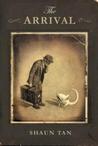
The Arrival

The ArrivalThe Arrival by Shaun Tan
My rating: 5 of 5 stars

Sepia-toned illustrations depict an immigrant's challenging journey into a strange new world.

Leaving behind a dragon-haunted city to start a new life for himself and his family, a young father encounters a world unlike the one he left behind. Nothing is familiar - the language, the buildings, or the food.

The expressive, wordless images manage to convey the emotions of being thrown into a new environment without a guide. The newcomer encounters other immigrants who have their own stories of dislocation to share; they also generously offer aid to the newcomer in their chosen country.

It amazes me how the play of images can convey deep emotions without soundtrack or words. The best silent films manage the trick: One Week by Buster Keaton is a twenty-minute movie that is hilarious and heartwarming as a hilariously inept young couple attempts to put together their first home. (City Lights starring Charlie Chaplin is a feature-length silent film that is famous for tugging the heartstrings.) Best yet, because One Week is out of copyright, you can watch the entire thing for free!


The Arrival is a lovely book, and a good introduction for any unfamiliar with graphic novels. It will appeal to adults and teens alike. For more wordless picture books for all ages, check out this Goodreads list.

Wednesday, March 12, 2014

The Best Writing on Writing

The Best Writing on Writing (v. 1)The Best Writing on Writing by Jack Heffron
My rating: 3 of 5 stars

This collection of essays from 1993 by poets, writers, and academics offers a rich variety of criticism and meditations on the art of writing.

I confess to skipping a few of the essays in the book (mostly the drier academic ones like Adrienne Rich's "Someone is Writing a Poem" or Carolyn G. Heilbrun's "Women and Biography"). The most accessible essays were from literary magazines and newspapers: Donald Hall's "The Books Not Read, the Lines Not Written: A Poet Confronts His Mortality" for the New York Times Book Review, or the funny "The Screenwriter's Lexicon" by David Freeman from The New Yorker. Another I especially enjoyed was "Mistakes People Make About Poetry" by James Fenton.

There's a fair amount of pretentious fluff, but you may find a few gems here about the slippery, hard-to-describe craft of writing. There are many, many wonderful essay collections out there for fans of the genre. Two of my favorites are A Passion for Books edited by Harold Rabinowitz, and the The Best American Essays of the Century, edited by Joyce Carol Oates

So Quotable:

"Depressed over my probable brevity, I find my reading mocked by my own acquisitiveness. Part of my pleasure in reading has always been pride in accumulation. I read to use what I read, for understanding and for writing; take away that future use and my reading mocks me: if I am not to live more than a wretched year or two, what am I reading for? I should be able to read for the joy of a book's beauty but  I cannot." - Donald Hall, "The Books Not Read, the Lines Not Written: A Poet Confronts His Mortality"

"The impulse, at least for someone of the writerly persuasion, is not to bemoan this condition but to remark it in detail. Initially, one's motives for translating happenstance into acts of language may be quite private. Catastrophe tends to be composed not of a monolithic event but of a welter of little incidents, many of which bear no apparent relationship to one another, and language, in ordering these into recognizable patterns, counteracts disorientation and disintegration. This process of making sense of a flood of random data also produces the impression - generally quite groundless - of control, which may save one's sanity even though it can't save one's own or anyone else's life." - Nancy Mairs, "The Literature of Personal Disaster"

"Womjep: A woman in jeopardy; sometimes called femjep. It's a hardy perennial among movie plots, from 'The Perils of Pauline' to 'Slumber Party Massacre.' The fems in jep were once beautiful and helpless and had torn clothes. They're still beautiful, but now they're often surgeonsor architects in torn clothes." - David Freeman, "The Screenwriter's Lexicon"

"The bottom line on character invention: people in fiction must have intelligible, supportable reasons for what they do and say, which is possible only if their behavior is motivated by factors a reader can understand and verify from evidence in the story. Unlike flesh-and-blood humans, story personae, however weird, must behave in ways that make some kind of sense; if they don't, their 'mystery' stays unsolved, unsolvable, pointless." - Ben Nyberg, "Why Stories Fail"

Monday, March 10, 2014

Point Your Face at This

Point Your Face at This: DrawingsPoint Your Face at This: Drawings by Demetri Martin
My rating: 3 of 5 stars

A stand-up comic's compilation of his simple and pun-filled sketches, part xkcd, part The Far Side.

Demetri Martin had a short-lived show on Comedy Central, and I remember his drawings being the best part. It's full of visual punning and absurdity (there's even a desert island drawing for those Far Side fans). The jokes are sometimes buried, but many of them made me laugh out loud after the moment of realization. There are a few duds, too, but they pass so briefly. This book could likely be read in a half an hour.

If you like your humor weird and nerdy (charts, graphs, and Venn diagrams abound), this is definitely the book for you.

Friday, March 7, 2014

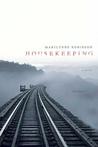
Housekeeping

HousekeepingHousekeeping by Marilynne Robinson
My rating: 2 of 5 stars

In this lyrical novel, two orphaned girls are raised by a procession of eccentric female relatives in a remote town in the Inland Northwest.

Ruthie and Lucille first end up with their grandmother, then two eccentric maiden great-aunts who prove unequal to the task of raising two young children. They call upon the long-lost Sylvie, the girls' transient aunt; she agrees to raise Ruthie and Lucille in spite of her inclination to wander. Other than a train wreck and a suicide, that's about all that happens in this book. (You think that sounds exciting? It's not.)

Okay, confession: I'm no great fan of a plotless narrative like Housekeeping. I think that Robinson's Pulitzer Prize-winning Gilead is a much stronger book. There, the endless philosophizing descriptions feel more natural (and believable) coming from an older pastor. They make less sense coming from the undereducated Ruthie; plus, the characters in Gilead have a stake in each other's lives, and experience real attachment and love. Gilead feels purposeful; Housekeeping admires the scenery.

The town of Fingerbone seems virtually unpeopled in this story because of Ruthie's utter friendlessness. Aside from her older sister, Lucille, she has no one. Her aunt Sylvie is so often lost in her own thoughts that she could be on another planet. And Lucille, resolute about achieving an ordinary life for herself, soon abandons Ruthie and Sylvie to their weirdness. There is a lot of beauty here, but it feels chilly.

All that said, Robinson's prose deserves to be called 'lapidary' without an ounce of sarcasm, so if you read books primarily to soak in language, this is for you. Each paragraph is a prose poem, only rarely overwritten. (Though a perpetual series of prose poems can get tedious for the rest of us who prefer plot and character interactions.) The descriptions of the Inland Northwest are spot-on, cold lakes and trains figuring most prominently. Fingerbone is modeled on Robinson's hometown of Sandpoint, Idaho.

This book is part of the NEA's Big Read, and I checked it out from the Colorado prison library I work in. We received ten free copies from a program called Words Beyond Bars. For the prison's purposes, I think that Gilead would have been a better choice (how attractive do you think Housekeeping is to an all-male audience that ordinarily enjoys a diet of fast-paced urban fiction and Star Wars books?) I'll be interested to see the reactions of the offenders when we do our book group! Maybe they will surprise me.

Quotable:

"That is to say that she conceived of life as a road down which one traveled, an easy enough road through a broad country, and that one's destination was there from the very beginning, a measured distance away, standing in ordinary light like some plain house where one went in and was greeted by respectable people and was shown to a room where everything one had ever lost or put aside was gathered together, waiting." - 9-10

"It was a source of both terror and comfort to me then that I often seemed invisible - incompletely and minimally existent, in fact. It seemed to me that I made no impact on the world, and that in exchange I was privileged to watch it unawares." - 106

"I simply let the darkness in the sky become coexistent with the darkness in my skull and bowels and bones. Everything that falls upon the eye is an apparition, a sheet dropped over the world's true workings. The nerves and the brain are tricked, and one is left with dreams that these specters loose their hands from ours and walk away, the curve of the back and the swing of the coat so familiar as to imply that they should be permanent fixtures of the world, when in fact nothing is more perishable." - 116

"Fingerbone was moved to solemn pity. There was not a soul there but knew how shallow-rooted the whole town was. It flooded yearly, and had burned once." - 177

Monday, March 3, 2014

Books Read in February

Big Girl Panties by Stephanie Evanovich - When Holly Brennan meets physical trainer Logan Montgomery on a plane trip, the overweight widow sees a change to regain her life - and result of their workouts will be not only sweat but steam.

Top of the Morning by Brian Stelter - Chronicling a tumultuous year in the history of morning television, a journalist goes behind the scenes to tell the real story behind Ann Curry's firing and the ratings wars.

The Cuckoo's Calling by Robert Galbraith - When a supermodel dies of an apparent suicide, one-legged Afghan veteran Cormoran Strike is hired to uncover the truth.

Point Your Face at This by Demetri Martin - A stand-up comic's compilation of his simple and pun-filled sketches, part xkcd, part The Far Side.

The Best Writing on Writing (1993) ed. Jack Heffron - This collection of essays from 1993 by poets, writers, and academics offers a rich variety of criticism and meditations on the art of writing.

Housekeeping by Marilynne Robinson - In this lyrical novel, two orphaned girls are raised by a procession of eccentric female relatives in a remote town in the Inland Northwest.

The Arrival by Shaun Tan - Sepia-toned illustrations depict an immigrant's challenging journey into a strange new world.

Wednesday, February 19, 2014

The Cuckoo's Calling

The Cuckoo's Calling (Cormoran Strike, #1)The Cuckoo's Calling by Robert Galbraith
My rating: 4 of 5 stars

When a supermodel dies of an apparent suicide, one-legged Afghan veteran Cormoran Strike is hired to uncover the truth.

The death of Lula Landry was tabloid fodder for months, but Strike soon discovers that her life was as complicated as her death. Her adopted brother, John Bristow, is determined to know the truth about his sister's seeming suicide.

Landry is the necessary victim void at the plot's center, and Rowling does a good job of making her seem appealing and her death regrettable. I found the solution to the mystery a letdown (and a bit unbelievable), but it's not a book you read for the plot alone. Instead, get into it for interesting characters and the great setting of contemporary London.

Strike's history as the son of a supergroupie and a rock star puts him in an interesting position as he interviews London's glitterati - he is not exactly the in crowd, but neither is he a complete outsider, and each character's reactions to his life story is a kind of litmus test. His relationship with the treacherous Charlotte will surely produce interesting surprises in the future, and I can hardly wait for the next installment.

I also liked the incredibly awkward meet-cute with his Temporary Solution secretary, Robin Ellacott. Robin finds herself at odds with her new fiance because of her fascination with Strike's work, but cannot help be drawn from the dullness of temp work into Strike's colorful world.

Robert Galbraith was once as anonymous as Richard Bachman, but both both "men" were destined to die the same death: Galbraith was outed as the pseudonym of J.K. Rowling (and Bachman, who "died" in the 1980s, was revealed to be Stephen King). After trying The Cuckoo's Calling, I'm on board to read Rowling's other adult novel, The Casual Vacancy, which came out to mixed reviews.

For an off-the-wall suggestion, I'm going to throw out this one: The Beautiful Fall by Alicia Drake, which gives a real-life glimpse into the tumultuous and self-obsessed world of fashion design, following the rivalry of Yves Saint Laurent and Karl Lagerfeld in 1970s Paris. Some of the interview scenes with Lula Landry's friends reminded me of the outrageous behavior Drake depicts.

Quotable:

"He knew more about the death of Lula Landry than he had ever meant or wanted to know; the same would be true of virtually any sentient being in Britain. Bombarded with the story, you grew interested against your will, and before you knew it, you were so well informed, so opinionated about the facts of the case, you would have been unfit to sit on a jury." - 25

"It was difficult for him to decide whether she was sincere, or performing her own character; her beauty got in the way, like a thick cobweb through which it was difficult to see her clearly." - 319

Friday, February 14, 2014

Top of the Morning

Top of the Morning: Inside the Cutthroat World of Morning TVTop of the Morning: Inside the Cutthroat World of Morning TV by Brian Stelter
My rating: 3 of 5 stars

Chronicling a tumultuous year in the history of morning television, a journalist goes behind the scenes to tell the real story behind Ann Curry's firing and the ratings wars.

In morning television, there is the juggernaut, Today, and then there is everyone else. For eight hundred and fifty straight weeks, Today was number one, raking in the advertising revenue. And then comes Ann Curry. Part one of Top of the Morning is the story of the Curry debacle at Today, part two recounts the woes and triumphs of Good Morning America, Today's chief rival, which took advantage of the crisis to aim for the coveted number one spot.

Stelter is not flattering to Curry, often calling her "strange" and "awkward" and painting Matt Lauer as her reasonable but bemused coanchor. Their chemistry was off from day one, and it was Curry who took the blame rather than the seasoned (male) anchor or any other aspect of the show (though he's received new heat after the debacle of her firing). Following on the heels of Lauer's warm relationship with Meredith Vieria, the contrast was obvious, and painfully awkward to witness. Once Lauer renewed his already lucrative contract for even more than his usual $20 million dollar-a-year paycheck, Curry's fate was sealed. And she didn't go quietly.

I don't quite buy Stelter's read on the situation, which casts Curry as the petulant bumbler and Lauer as the seasoned pro (Stetler was unable to interview Lauer for the book, and had other restrictions placed on what he wrote in exchange for behind-the-scenes access). Stetler does, to his credit, mention how often a female co-anchor bears the blame for failing ratings, only to be replaced by a newer model (Joan Lunden to Lisa McRee in 1997). Morning shows are created mostly by men for a mostly female audience, and that leads to conflicts.

Let's compare the coanchors Lauer had chemistry with to the one he didn't take to. You may draw your own conclusions:


Top of the Morning reads like a juicy gossip column. Packed with colorful writing (albeit, with sometimes overheated metaphors), Stelter maintains the breathless tone of someone keenly interested in the 'who hates who' backstories, even mentioning his own presence at a few of the important gatherings. He tracks the meanness and squabbles, the pettiness of men and women in charge of programs worth millions of dollars. They take their morning TV very seriously.

If you are even vaguely familiar with television, you'll recognize many of the names Stelter bandies about. I enjoyed hearing the gossip, though I confess to having to look up about half of the current and former morning show anchors mentioned. (The often-mentioned conflict between serious journalists and sensationalist fluff is one that makes me chuckle - to me, most broadcast news seems like highly compressed fluff anyway.) You won't learn a lot about the way morning shows function, or have to sit through the mysteries of Nielson ratings, but you will understand the backstory behind this infamous video:


Want more behind-the-scenes? Try The Late Shift: Letterman, Leno, & the Network Battle for the Night by Bill Carter, or Live from New York: An Uncensored History of Saturday Night Live by Tom Shales and James Andrew Miller.

Quotable:

"In the TV world, as you may know, 'to do something' often means 'to fire someone.'" - 4

"A genuine meanness seemed to color the staff's attitude toward their troubled colleague [Ann Curry], something that looked from certain angleslike the giddiness brought on by a sense of doom. One staff member, offended by the behavior, said 'a lot of time in the control room was spent making fun of Ann's outfit choices or just generally messing with her.' On one memorable morning, Curry wore a bright-yellow dress that spawned snarky comparisons to Big Bird." - 80

"When TV critics and anonymous sources blamed a lack of 'chemistry' for Curry's bad year with Lauer, she heard a euphemism for something else. Several friends recalled her saying, 'Chemistry, in television history, generally means the man does not want to work with the woman.' They said she added, 'It's an excuse generally used by men in positions of power to say 'The woman doesn't work.' Historical examples abound: Connie Chung and Dan Rather; Barbara Walters and Harry Reasoner. Chemistry, Curry argued, is when both people want to play catch - when somebody isn't interested in playing catch, that's when there isn't chemistry. She, at least in her own mind, came to work every day with her glove on and her throwing arm all warmed up." - 249

Wednesday, February 12, 2014

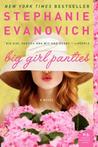
Big Girl Panties

Big Girl PantiesBig Girl Panties by Stephanie Evanovich
My rating: 3 of 5 stars

When Holly Brennan meets physical trainer Logan Montgomery on a plane trip, the overweight widow sees a change to regain her life - and result of their workouts will be not only sweat but steam.

First off, let's not mix up author Stephanie Evanovich with her aunt, Janet Evanovich, as I did! This is Stephanie E's first novel.

At the core of Big Girl Panties is a fun fantasy - fat girl wins over studly prince, but the rest is nothing special. The sex scenes and some of the descriptions are awkward ('strong manly hands,' lol), and the rest lacks fizz. The heroine's revenge for a small slight is odd and embarrassing, and the hero at times comes off like a shallow jerk.

I'm not sure the  novel adds much to the discussion of our society's intense disdain for overweight people, but I did find the hero's self-awareness about his own prejudices interesting. The heroine does have to lose a lot of weight to finally gain his attention (and let's just gloss over the ethics of a trainer boning a client), but her backstory is unique and interesting. I wish that her troubled family was more in the picture, because it would have added some needed depth and drama to the story.

That said...it's not all bad. (I know, it sounds bad. But it's not.) For a plane trip or a day on the beach, you could do much worse. Enjoy this book for the fluff it is, but don't expect a whole lot more.

For a funny, action-packed romance with flawed main characters, try Janet Evanovich's Stephanie Plum series, which starts with One for the Money. Another classic of the chick lit genre is Helen Fielding's Bridget Jones's Diary, which also stars a female protagonist who finds love in spite of being on the heavy side. You might also try Stephanie Evanovich's upcoming novel The Sweet Spot if you found yourself enjoying her work and want to see this new author developing her voice.

Monday, February 10, 2014

I Don't Know

I Don't Know: In Praise of Admitting Ignorance (Except When You Shouldn't)I Don't Know: In Praise of Admitting Ignorance by Leah Hager Cohen
My rating: 3 of 5 stars

Drawing on the insights of science and literature, this essay explores the power of admitting ignorance - and why it is so difficult to do so.

It's a short book, barely 72 pages long, and packed with the titles of other books to explore if you're fascinated by the topic of ignorance and the limits of human knowledge. There are intense social pressures to appear knowledgeable - pressures that even small children feel, though a failure to admit ignorance often spreads more darkness than light.

With anecdotes ranging from "The Emperor's New Clothes" to the recordings of a downed plane's little black box, Cohen illustrates the dangers of pretending to know when you don't. She brings together numerous sources in an interesting way, and it is clear that, with the recent insights of modern neuroscience and psychology, we seem to be getting a picture of exactly how little we know.

You should flip through Cohen's book with pen in hand to write down titles. But one she doesn't mention, Ignorance: How It Drives Science by Stuart Firestein, is another short book that looks at the subject from the perspective of a scientist. Opposing Cohen's willingness to admit ignorance is the clever book-length essay How to Talk About Books You Haven't Read by Pierre Bayard, which makes the argument that a little knowledge can go a long way. Finally, Mistakes Were Made (But Not By Me) by Carol Tavris and Elliot Aronson, explores our endless human tendency toward self-justification.

Quotable:

"Over time, he lamented, we lose our openness. [Ashley] Montagu attributed this in part to conventional schooling, which he blamed for squashing a love of knowledge. 'School, instead of being a magic casement which opens on unending vistas of excitement, has become a restrictive, linear, one-dimensional, only too often narrowing, experience and to many a dead loss.' By the time formal education stops, around early adulthood for most people, 'it is as though they believed that they had learned all they needed to know,' he wrote. 'At this time they begin to grow a shell around this pitiful store of knowledge and wisdom; from then on they vigorously resist all attempts to pierce that shell with anything new.' Montagu called this process psychoschlerosis, the hardening of the mind, and cited it as the reason most adults 'draw back from the unfamiliar, perhaps because they are reluctant to reveal ignorance.'" - 19

"That our intuition could lead us astray is troubling in direct proportion to the degree of trust we place in it. The solution would seem to be: Don't be overly trusting. Mix in a healthy dose of skepticism. But suppose we don't have a say in the matter? Suppose we're hardwired to trust - to believe in - our instincts, regardless of whether they're right? Suddenly the problem of not knowing becomes a lot more complicated." - 29

Friday, February 7, 2014

Books Read in January

The Radicalism of the American Revolution by Gordon S. Wood - Pulitzer Prize-winning historian Gordon S. Wood takes a nuanced look at pre-revolutionary shifts in American culture, family structure, politics, religion, education, and economics.

Men at Arms by Terry Pratchett - A strange new plot is afoot in Ankh-Morpork's Assassin's Guild: one that threatens to draw the Watch and Captain Sam Vimes - on the eve of his retirement - into the path of a deadly new weapon.

The Hidden Gallery by Maryrose Wood - On a visit to London, the mystery surrounding the wolf-children of Ashton Place deepens when their young governess, Penelope Lumley, receives warnings of danger at every turn.

Fortunately, the Milk by Neil Gaiman - Going out for milk turns into an adventure of epic proportions for one boy's father.

Carnivores by Aaron Reynolds - When misunderstood predators lacking self-confidence meet weekly, strange things are sure to happen.

The Innocent Mage by Karen Miller - When fisherman Asher escapes to the big city to make his fortune, the brash young man little suspects that he is destined to be the center of earth-shattering events that may destroy his homeland.

The Hoarder in You by Dr. Robin Zasio - Dr. Robin Zasio, known for her work on A&E's Hoarders, reveals the keys to uncluttering your mind and life, exposing the truth about anxiety, compulsion, and hoarding tendencies.

The Monuments Men: Allied Heroes, Nazi Thieves, and the Greatest Treasure Hunt in History by Robert M. Edsel with Bret Witter - In the final days of World War II, the 'Monuments Men' scoured Europe to preserve the most important art and buildings in Europe - priceless masterworks Hitler ordered destroyed if the Reich fell.

The Awakened Mage by Karen Miller - With his entire family dead, magic-less Prince Gar must assume his role as weather worker of Lur, unaware of the coming storm and the man destined to stop it: his best friend, the lowly fisherman Asher.

The School for Good and Evil by Soman Chainani - When best friends Sophie and Agatha are kidnapped and forced onto opposite sides of a School dedicated to churning out fairy tale villains and heroes, they must stick together to find a way out - or face their true destinies alone.

Reflections by Diana Wynne Jones - A collection of essays and speeches by a renowned children's author illuminates not only her body of work but also the captivating magic of literature.

I Don't Know by Leah Hager Cohen - Drawing on the insights of science and literature, this essay explores the power of admitting ignorance - and why it is so difficult to do so.

Wednesday, February 5, 2014

Reflections

Reflections: On the Magic of WritingReflections: On the Magic of Writing by Diana Wynne Jones
My rating: 4 of 5 stars

A collection of essays and speeches by a renowned children's author illuminates not only her body of work but also the captivating magic of literature.

We live in an age of literary plenty, where some of the most exciting books out there are written for young readers. Anyone who has been paying attention knows how much I admire Diana Wynne Jones. She is the heir to C.S. Lewis and the forerunner of J.K. Rowling without being quite like either author (though apparently she didn't care much for Rowling).

I love books of essays, and this one was a special treat because of Jones's insights into not only her own stories but the universal way stories make themselves felt in the minds of readers. She imparts her deeply informed sense of storytelling, developed from a lifetime of reading the great myths and fairy tales.

There are many small repetitions here because it's a body of work formed over many years and it is clear that her mind returned to the same themes continually. One interesting story that gets repeated is her mother's suppression of a chapter from The Wind in the Willows called "The Piper at the Gates of Dawn." The rationale behind her mother's prohibition could easily serve as a lesson to would-be parental censors on the power adults can exercise over children, as well as the power children have to overthrow such directives in their own lives.

Intriguingly for literary nerds like me, Jones relates her experiences of two of her Oxford lecturers: C.S. Lewis and J.R.R. Tolkien. Tolkien lovers will be fascinated by her insightful discussion of his storytelling abilities ("The Shape of the Narrative in The Lord of the Rings").

Jones also recounts, with some heat, the ingrained sexism she faced as a female writer: "Actually my Pig of the Year Award went to the male reviewer of Fire and Hemlock. I quote it here in full: 'This is a girl's book and I don't see why I should try to understand it.' End review." (In "A Whirlwind Tour of Australia".)

For those interested in reading other short essays on the work of children's literature, Katherine Paterson's A Sense of Wonder: On Reading and Writing Books for Children is a good next step. Paterson is an author whose works are miles away from Jones's, but whose conclusions about literature are often the same. Both make a great addition to any collection of books about writing.

Quotable:

"It does seem that a fantasy, working out in its own terms, stretching you beyond the normal concerns of your own life, gains you a peculiar charge of energy which inexplicably enriches you. At least, this is my ideal of a fantasy, and I am always trying to write it." - "The Children in the Wood"

"Anyway, to get back to the Real Book engraved in the minds of head teachers. It is written by a man for adults. It contains only facts, or narrative purporting to be facts. It should appeal to few people. It should not be amusing. And it should contain a message, or at least a serious discussion of current problems, set out in such a way that it can be extracted for teaching purposes." - "A Whirlwind Tour of Australia"

"A good book should be another place, beyond ordinary life and quite different from it, made with care and containing marvels. But though it is beyond everyday life, it if by no means unconnected with it. [...] Imagination doesn't just mean making things up. It means thinking things through, solving them, or hoping to do so, and being just distant enough to be able to laugh at things that are normally painful." - "A Whirlwind Tour of Australia"

"We had a long shelf of books that tried to teach you something under the disguise of a story, and we labeled that shelf GODDY BOOKS." - "Inventing the Middle Ages"

Monday, February 3, 2014

The School for Good and Evil

The School for Good and Evil (The School for Good and Evil, #1)The School for Good and Evil by Soman Chainani
My rating: 4 of 5 stars

When best friends Sophie and Agatha are kidnapped and forced onto opposite sides of a School dedicated to churning out fairy tale villains and heroes, they must stick together to find a way out - or face their true destinies alone.

Beautiful Sophie hates the thought of being ordinary, and is determined to find her way into the fairy tales so she can marry her own handsome prince. In spite of her ceaseless vanity and self-absorption, she manages to befriend the ugly and lonely Agatha.

Soon the unlikely best friends are kidnapped and forced to participate in the bizarre world of the School for Good and Evil, where the mission is to create pure paragons of Good and Evil who will then be remembered in fairy tales.

Except someone makes a mistake: beautiful Sophie is dropped into the Evil side and misfit Agatha placed in the candy-pink side of Good.

While Sophie is forced to study Uglification and Henchmen Training with the Evil, Agatha learns that Good princesses whistle up forest animals, do their hair, and wait for princes to come to the rescue. Impatient with frippery, Agatha only wants to return home with her friend. Pink-loving Sophie, however, longs to switch sides so she can rule the Good - in spite of occasionally showing an unprincesslike aptitude for her Evil lessons.

It's a complex and unexpected book (sometimes overly action-packed) where the line between Good and Evil remains in sight but grows increasingly blurred. The friendship between the two girls is compelling as each struggles with her own goals; sometimes in concert with her counterpart, mostly in opposition.

Sophie's lack of introspection sometimes makes her frustratingly dense, but she is entertaining as an unwitting villainess-in-training. (She's cut along the lines of Galinda the Good in the musical Wicked, and there are other interesting parallels to that story.) Agatha, on the other hand, sees her situation more clearly and is a sympathetic heroine struggling to do Good in spite of loneliness and an inclination to Evil.

Soman Chainani knows his fairy tales, and he gets at the complications of human nature that go beyond simple Good and Evil. It's an entertaining story, as smart as fractured fairy tales books should be. Fans of Catherynne M. Valente's The Girl Who Circumnavigated Fairyland in a Ship of Her Own Making will find much to enjoy here. There are flashes of humor, too, that recall The Hero's Guide to Saving Your Kingdom by Christopher Healy. Fans of traditional fairy tales who are interested in the deeper morality should also read George MacDonald's classic The Lost Princess. And don't forget Chainani's upcoming sequel: A World Without Princes!

Quotable:

"Evil thought it had corrupted Good, and Good thought it had enlightened Evil, but it didn't matter." - 270

" 'I was angry!' Sophie cried. 'I didn't mean any - I didn't want to hurt him! I don't want to hurt anyone! I'm not a villain!'
'You see, it doesn't matter what we are, Sophie.'
Lady Lesso leaned so close she just had to whisper.
'It's what we do.' " - 286

Friday, January 31, 2014

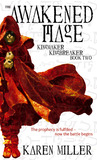
The Awakened Mage

The Awakened Mage (Kingmaker, Kingbreaker, #2)The Awakened Mage by Karen Miller
My rating: 2 of 5 stars

With his entire family dead, magic-less Prince Gar must assume his role as weather worker of Lur, unaware of the coming storm and the man destined to stop it: his best friend, the lowly fisherman Asher.

Three words from this fan of epic fantasy: too damn slow. The mourning for the dead king, queen, and bratty Princess Fayne takes up a full third of the story, contraposed with the evil magician Morg's struggle for life inside of a broken body.

More interestingly, there is also a growing romance between Asher and Daphne, all the while the secret of the prophecy standing between them. And Asher and Gar continue to seal their fate together, taking steps that progressively lead to the breach of the kingdom's number one rule: Olken don't do magic.

When Asher at last learns of his destiny as the Innocent Mage, he is annoyingly pouty about it. It's that whole "You lied (for good reason) and now our love means nothing!" cliche that I hope never to see again. It's too bad to see an interesting main character blank out at the eleventh hour, which may be why he is given so little time to step up as the Awakened Mage.

This is the conclusion of two books that might have been better served as one, with some judicious pruning. Perhaps it simply isn't my cup of tea, since it's a character-focused fantasy that is light on the action and world-building. We do get to understand more of Doranen history, and more about the Wall, but the system of magic is pretty bland and unoriginal (especially compared to recent books like Brandon Sanderson's Mistborn trilogy). The story of Barl and Morg seems more interesting than the aftermath of their doomed love, and is told in the prequel A Blight of Mages.

There are plenty of books out there with hooded mages on the front, but let me help you cut through the fantasy dross to get to the best: try Patrick Rothfuss's The Name of the Wind and (a series that admittedly needs no recommendation), A Song of Ice and Fire by George R.R. Martin.