Wednesday, November 27, 2013

The City and the Stars

The City and the StarsThe City and the Stars by Arthur C. Clarke
My rating: 4 of 5 stars

In the immortal city of Diaspar nothing changes - until Alvin is created, the first new human in eons, and the first to ask what lies beyond the city's gilded walls.

Diaspar is populated by immortal humans who stave off boredom with art and science, and by a process of artificial reincarnation that allows them to cycle through stages of existence and storage. The agoraphobic inhabitants long ago imprisoned themselves in the face of an alien threat, becoming risk-averse and incurious, content to exist in a labyrinth with no exit.

Alvin, though, is a Unique. He has no memories of past lives to discover when he reaches adulthood, because he is a completely new person. In his beautiful, self-contained home, Alvin finds himself growing restless at its inhabitants' futile, inward-facing lives. But there is nowhere else to go - beyond the walls they are surrounded by a cold desert: all that remains of Earth. Alvin attempts to learn long-forgotten secrets and is aided by a Jester named Khedron (part of the city planning was to insert agents of controlled chaos to keep things interesting), a man who describes himself as "a critic, not a revolutionary" (57).

What Alvin finds outside could either annihilate the highly polished remnants of human civilization or grant them a freedom they never imagined, and possibly begin a rejuvenation the species so desperately needs.

There is no writer quite like Clarke, who delights in introducing mysterious landscapes and contemplating huge swaths of time. Long-view science fiction like this can be dizzying (and sometimes defeatist, full of dying suns and senescent species), but Clarke keeps Alvin moving from discovery to discovery. There is an optimism that I find appealing, particularly since so much modern science fiction skews toward absolute dystopia.

He's also a golden age author, which leads to some drawbacks; it's a male-dominated world (the only female character worth even a passing mention is Alvin's stalker, Alystra). Clarke also expresses an insulting view of religion, calling it a "disease" to be destroyed by science, a form of irrationality inevitably overruled by superior logic. I find this incredibly narrow-minded, but it's a common philosophical difference I have with much of hard science fiction. (Clarke was a firm atheist as well as a logical positivist.)

As the title hints, this book is less about character or plot than it is about setting, so fans of Clarke's novel Rendezvous With Rama will find much more to enjoy here. Other books where setting is primary are the fantasy classic Titus Groan (first in the Gormenghast books) by Mervyn Peake and the modern speculative fiction novel The City and the City by China Mieville. You might also try Larry Niven's Ringworld if old-school sexism isn't overly bothersome to you as a reader.

Quotable:

"Diaspar had been planned as an entity; it was a single mighty machine. Yet thought its outward appearance was almost overwhelming complexity, it merely hinted at the hidden marvels of technology without which all these great buildings would be lifeless sepulchres." - 28

"No single individual, however eccentric or brilliant, could effect the enormous inertia of a society that had remained virtually unchanged for over a billion years." - 30

"Sympathy, for one whose loneliness must be even greater than his own; an ennui produced by ages of repetition; and an impish sense of fun - these were the discordant factors which prompted Khedron to act." - 58

"There was only one thing of which he could be certain now. Boredom would not be a serious problem for a considerable time to come." - 102

"Alvin would never grow up; to him the whole universe was a plaything, a puzzle to be unravelled for his own amusement. In his play he had now found the ultimate, deadly toy which might wreck what was left of human civilisation - but whatever the outcome, to him it would still be a game." - 177

Monday, November 25, 2013

Which Witch?

Which Witch?Which Witch? by Eva Ibbotson
My rating: 3 of 5 stars

Kindly white witch Beladonna has never been able to do black magic, but when the handsome wizard Arriman sets a contest to find the wickedest witch to be his bride, she is determined to give it her best shot.

Beladonna has her work cut out for her if she wants to shake her embarrassing affinity for begonias and cute woodland creatures, but she is helped out in the contest by an orphan named Terence Mugg. Terence owns a pink earthworm named Rover, and Rover seems to be just the familiar to help Beladonna accomplish the necessary nastiness.

The good witch's competition is her own coven - and each witch is icky in her own way, accompanied by a familiar (none of the black cat variety, but far more ingeniously odd). The contest is inventive and sometimes even scary: Madame Olympia's hideous Symphony of Death is a stomach-turning trick that H. P. Lovecraft would have been proud to write.

The side characters are as fun as the witches - I particularly liked Mr. Leadbetter, Arriman's tailed but rather ordinary secretary, who enjoys watching Miss Universe competitions. There is also Arriman's silent friend, a creepy wife-killer ghost named Sir Simon: Sir Simon's fate is amusing and appropriate (actually, if Ibbotson had written a sequel about that relationship I would read it in a heartbeat).

Ibbotson's witches possess a Charles Addams type of evil (you may want to check out The Addams Family: Evilution if you're a fan of macabre humor). They have an affinity for creepy-crawly things but doing little actual harm to innocent strangers - with the exception of the truly wicked Madame Olympia, whose evil is just a tad too evil for everyone's taste. If you want real wickedness, you'll have to turn to Roald Dahl's The Witches.

Wednesday, November 20, 2013

I Shall Wear Midnight

I Shall Wear Midnight (Discworld, #38)I Shall Wear Midnight by Terry Pratchett
My rating: 3 of 5 stars

Tiffany Aching, Chalk witch, must cope not only with everyday human failings of the people she watches over, but also the rise of an old evil that is out to destroy witches everywhere.

Tiffany is overstretched at the beginning of this book, but by the end (it's not really a spoiler to say it) witches seem to appear like mushrooms and there is no doubt that Tiffany is on her way to become one of the great hags (as the Feegles would say). Before that can happen, she must face the awkwardness of coming back to her sheep-raising community, which is unaccustomed to having a witch around - particularly one who is only sixteen years old.

Roland, the Baron's son, is engaged to a soppy young woman, and that adds a new layer of awkwardness given his past relationship with Tiffany. Tiffany is soon distracted by the plight of a young woman in a terrible home situation, the job of keeping peace in her community, and tending to the quotidian needs of the overlooked. Unfortunately, the young witch is being pursued by an ancient force known as the Cunning Man. Fortunately, the Kelda of the Nac Mac Feegles is there to provide guidance and friendship, and Tiffany is never far from the help of the blue-skinned Pictsies or of her fellow witches.

This book is sprawling and overstuffed compared to the other Aching books. Tiffany is always on the move from Feegle mound to Baron's castle to Ankh-Morpork (where, delightfully, we get a glimpse of the Watch's Commander Vimes, my favorite Discworld character, from Tiffany's perspective; and as a bonus a foundling finds his people). It's always a pleasure to follow Pratchett's characters and see them interact, particularly as they continue to do what they do best.

We get a glimpse of several important characters from Equal Rites, one of Pratchett's Discworld novels for adults. In an afterward, Pratchett mentions his personal experience growing up in a rural community like the one on the Chalk (which accounts for the realism of the details he chooses), and also points to a book where he drew the most striking images in I Shall Wear Midnight (even, in some ways, better than the title image) of the hare leaping through fire: The Leaping Hare by George Ewart Evans and David Thomson.

Monday, November 18, 2013

Wintersmith

Wintersmith (Discworld, #35)Wintersmith by Terry Pratchett
My rating: 4 of 5 stars

When junior witch Tiffany Aching joins a dance of the seasons, she attracts the attention of the Wintersmith and needs all of her ingenuity to rebalance the world before it plunges into permanent winter.

Tiffany is still in the mountains completing her training under the many borrowed eyes of her blind mentor, Miss Treason. When they attend a Dark Morris one night, Tiffany joins in, little realizing that she's inserted herself into a far larger story. Now the Wintersmith is in love with her, and in the pursuit "it" is striving to become a "he". When spirits act like a smitten human boy, odd things tend to happen - like millions of identical Tiffany-faced snowflakes. While flattering, it's also terrifying, and Tiffany is determined to correct her mistake before anyone is hurt.

The young witch has other worries, too. The Nac Mac Feegle are still around causing trouble and watching over her. She has to preside over an unusual funeral and burial of one of the older witches, and help the witch's useless replacement, Anagramma, learn the ropes of caring for a community. Navigating the society of witches is always tricky, since witches are by definition bossy, opinionated, and self-confident. Tiffany also learns the magic of "Boffo" and how to disappear.

There are Pratchett's usual comedic touches to enjoy: one of my personal favorites is the dilemma of librarians stranded in the cold chalk country who are earnestly wondering what to burn next. Then there is Tiffany's critical reaction to the farm setting of a steamy romance novel procured for her by the Mac Feegles from said librarians. There are also appearances by Granny Weatherwax and Nanny Ogg, two characters who appear in the Discworld Witches subseries.

For recommendations on what to read next, check out my review of the first Aching novel, The Wee Free Men.

Friday, November 15, 2013

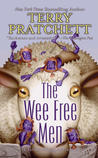
The Wee Free Men

The Wee Free Men (Discworld, #30)The Wee Free Men by Terry Pratchett
My rating: 4 of 5 stars

When the Queen of the Fairies steals her whiny little brother, witch-in-training Tiffany Aching joins with a rowdy group of tiny kilted men to rescue him.

This is the first of Pratchett's excellent YA Discworld series starring young witch Tiffany Aching as she grows up and into her considerable powers. It's full of Pratchett's usual wit and throwaway jokes - educations in sheep country, for example, are purchased with eggs or root vegetables - and introduces a female protagonist who is a worthy addition to the Witches of Discworld.

Witchcraft in Discworld is less about showy wand-waving and more about clever, clear-sighted women doing what needs to be done in their communities. In this spirit, Tiffany dispatches monsters with a frying pan and the uncommon sense granted to her by the gifts of First Sight and Second Thoughts. Her role model is her Granny Aching, a woman whose entire life was given to keeping sheep and influencing people with her quiet wisdom and power.

Tiffany stumbles into a clan of Pictsies known as the Nac Mac Feegle, a rowdy bunch of tiny blue men whose chief talents are fighting, drinking and stealing. They don't know the meaning of the word fear (not being great readers), and are only intimidated by lawyers and things written down - like arrest warrants and legal summonses. They are led by the appropriately named Rob Anybody, and primarily act as kicking, cursing comic relief.

For Pratchett, stories that obscure truth or try to make reality too simple are the real evil. The worst kind of sight, worse than being blind, is seeing things only as you think they should be instead of as they are. (He steals a good idea from C.S. Lewis's The Voyage of the Dawn Treader in creating a world where "dreams come true", then asserting that a world like that is the most uncanny and terrifyingly eerie one imaginable.) One of the most moving aspects of the story is Tiffany's reaction to the tragic death of a local woman who was accused of witchcraft, a thread that Pratchett picks up in a later Aching sequel, I Shall Wear Midnight.

The character of Tiffany is a great one: she is a quiet, watchful girl with strong opinions. She reads the dictionary and enjoys thinking about words. She can be counted on to do what needs doing even if it seems impossible or dangerous, and is unflinchingly observant of human nature, including her own. (For example, she pursues her younger brother less out of affection than from a sense of outraged ownership because he is, after all, her brother.)

Tiffany can easily join Meg Murry from A Wrinkle in Time by Madeleine L'Engle (let's not forget Mrs. Whatsit, Mrs. Who, and Mrs. Which, who could easily stand toe to toe with Nanny Ogg and Granny Weatherwax) or Coraline from Coraline by Neil Gaiman. I would also compare her to Victoria Wright from Claire Legrand's The Cavendish Home for Boys and Girls, another unsentimental but thoughtful heroine who boldly goes to rescue others from danger.

Wednesday, November 13, 2013

The Girls

The GirlsThe Girls by Lori Lansens
My rating: 4 of 5 stars

Can you really know another person, even if you spend every waking moment with her? Ruby and Rose are conjoined twins narrating the story of their remarkable shared lives.

They are on the cusp of their 30th birthday, which will make them the oldest surviving pair of conjoined twins in history (though in reality that honor goes to Lori and George Schappell, born in 1961). Rose and Ruby are joined at the head and everyone in their small Canadian town refers to them simply as "the Girls." Rose, an aspiring writer and poet, begins recording their history: from the tornado that touched down on the day of their birth to the love story of their parents, Aunt Lovey and Uncle Stash, to their present independent lives.

Aunt Lovey, their adopted mother, is the queen of love that is clear-sighted and tough. She has been married to Uncle Stash, a Slovakian immigrant, for most of her life. Rose narrates their love story and it is clear that there is a kind of conjoinment that is spiritual rather than physical.

Ruby, who is far more interested in archaeology and television than in literature, tells the Girls's story from her own perspective. Lansens is skilled at making their separate voices distinctive and convincing; she not only captures the difficulties of being conjoined, but also emotions that are not exclusive to sisters or twins.

Ruby and Rose have never met eyes but can feel the other's blush or the movement of a frown, and frequently misunderstand each other; it is this tension that Lansens uses to unforgettable effect. Ruby, herself not a writer, tends to blurt out the stunning details of their shared lives that Rose leaves out (or is perhaps working up to reveal in a more literary fashion). It's a virtuoso performance of narrative and voice.

The daily awkwardness of their condition is thoughtfully explored - for example, how do you plan a surprise party for someone who is with you literally every waking moment? What happens when one sister is sick and the other is not? The Girls are frequently embarrassed to be treated as a single person instead of two separate women. They are normal sisters with secrets and different opinions and tastes - some of my favorite moments are when you see the mixed results of one sister's occasional attempts at deceiving the other.

The events near the end of the book seem a bit unconvincing, but ultimately it's the characters and their separate but parallel journeys - as well as the secondhand love story of their parents - that make this novel so readable.

For your next read, character-driven stories abound, but Housekeeping by Marilynne Robinson is a gorgeously written tale of sisters and family by a modern literary master. One of my other all-time favorite books about family love is Peace Like a River by Leif Enger. In her afterward to The Girls, Lansens provides a list of books for further reading, including Millie-Christine: Fearfully and Wonderfully Made by Joanne Martell, a historical account of two conjoined women born into slavery in the 1850s American South.

Cover note: I don't usually quibble about bad cover art, but in this case the jacket image of The Girls is so misleading that I have to say something. It's not only inaccurate, but also gives readers absolutely no indication of the content of the story and is guaranteed to lose your interest. Trust me, this is one book you can't judge by the cover.

Quotable:

"I've never set eyes on my sister, except in mirror images and photographs, but I know Ruby's gestures as my own, through the movement of her muscles and bone. I love my sister as I love myself. I hate her that way too." - 5

"We're not weird. We just have a weird condition." - 114

"I started to hum, and Aunt Lovey knew that I was gone, not physically of course, but that I had walked through a door and closed it behind me and could not be reached for comment. (Ruby has the same capacity to make a swift mental exit, and I've read about the phenomenon in other conjoined twins. Some people call it 'wandering.' It's a state of consciousness that is not quite here and not quite there, deeper than a daydream, not awake but not asleep. ...)" - 155

Monday, November 11, 2013

Ender's Game

Ender's Game (Ender's Saga, #1)Ender's Game by Orson Scott Card
My rating: 5 of 5 stars

A brilliant young boy is molded into a military leader to save humanity from an alien threat in this classic work of science fiction.

I was inspired to reread this novel by the release of the long-awaited movie version. The gorgeous visuals fail to convey the emotional complexity of Ender's Wiggin's journey from six-year-old boy to pre-pubescent general, so I was glad I went back to the original to refresh my memory.

It's a classic Chosen One story, much like Harry Potter or Dune, where a special child is the only one who can save his people from total annihilation. Ender is special, so special that he was actually requisitioned by the government in the hopes that he would balance out the traits of his sociopathic brother, Peter, and his compassionate sister, Valentine.

Humanity is united by two previous invasions by an alien species known as the Formics (or colloquially as the buggers). Having barely won the past two encounters, Earth's government sets up a special Battle School designed to train young children to be tactical geniuses.

Battle School is full of games to challenge Ender. The most important of these games takes place in the battleroom (like zero-g laser tag), where children fight each other in armies. The students at the school are brilliant, aggressive, and frightening: Ender is the best of them all. He's manipulated into a precision weapon, proving himself lethally competent to face whatever the adults throw his way. Ender is aware of the manipulations and hates them, but he chooses to fight, recognizing the greater threat.

There are intriguing characters (mostly children), tense and clever battle sequences, a bizarrely unsettling mind game, and an overarching mystery about the true nature of the enemy. It's Lord of the Flies in space, and the perfect intro novel for those who have never read science fiction and want to try it. Its exploration of free will, warfare, and the helplessness of childhood is part of the best tradition of classic science fiction.

Ender's Game stands alone but is the first in a series, and the sequel Speaker for the Dead follows an adult Ender into self-imposed exile. There is also the great parallel series, beginning with Ender's Shadow, that tracks the Battle School life of Ender's second-in-command, Bean. Bean is a unique character, and his story may echo Ender's but ends with very different results.

If you want another sweeping novel about fascinating alien species and child protagonists, definitely try Vernor Vinge's A Fire Upon the Deep.

Quotable:

"Survival first, then happiness as we can manage it."

"Any decent person who knows what warfare is can never go into battle with a whole heart."

"Welcome to the human race. Nobody controls his own life, Ender. The best you can do is choose to fill the roles given to you by good people, by people who love you."

Friday, November 8, 2013

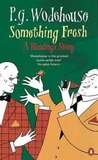
Something Fresh

Something Fresh (Blandings Castle, #1)Something Fresh by P.G. Wodehouse
My rating: 4 of 5 stars

Trouble and romance are in the offing when two adventurers descend upon Blandings Castle incognito - all because of Lord Emsworth, an innocent kleptomaniac who steals a collector's rare treasure.

Ashe Marson and Joan Valentine meet by accident and you know it will soon be love. But the two young people, both starving writers, find themselves at odds when they independently accept the challenge of retrieving a precious scarab for an American collector. They infiltrate Blandings' complex caste system of the servants, braving a keenly suspicious secretary and Lord Emsworth's reckless use of firearms.

Meanwhile, young muttonhead Freddie Threepwood (an equal to Bertie Wooster in lazy amiability, and with much the same taste in literature), is engaged to the American collector's daughter, Aline. But he has an energetic rival who plans on wooing Aline right out from under Freddie's nose....

The coveted Egyptian scarab (a worthy rival to the silver cow creamer in its ability to act as a cursed object) that drives the plot in the first of the Blandings Castle stories. Wodehouse showcases his usual effortless wit and introduces the Blandings crew, though Ashe and Joan steal center stage with their (non-malicious) plotting. We are treated to a glimpse of the stratified serving class and a very funny conversation about women's suffrage where Joan compares Ashe's chivalry to a dead mouse her proud cat might bring her as a gift. The romances are sweetly credible - especially Joan and Ashe, who are each other's equals as well as soulmates.

The third person narration gives Wodehouse scope to move into different perspectives, but his wonderful storytelling voice remains true (though this isn't his most cohesive plot). The best thing to follow Wodehouse with is obviously more Wodehouse, so The Code of the Woosters, featuring another MacGuffin plot and country manor setting, may be right up your alley.

Quotable:

"Collecting, as Mr. Peters did it, resembles the drink habit. It begins as an amusement, and ends as an obsession." - 50

"Oh, I've nothing to say against Freddie. He is practically an imbecile and I don't like his face, but apart from that he's all right." - 61

Wednesday, November 6, 2013

Quiet: The Power of Introverts in a World That Can't Stop Talking

Quiet: The Power of Introverts in a World That Can't Stop TalkingQuiet: The Power of Introverts in a World That Can't Stop Talking by Susan Cain
My rating: 3 of 5 stars

The quiet folk get their due in this mix of business psychology and self-help that describes the power of introversion in business and daily life.

Susan Cain, a self-described introvert, discusses the results of her years of following the stories about these hard-to-know people. You may recognize them as the ones that avoid parties, prefer books or quiet nights at home with family, and who sometimes get left behind in fast-paced business meetings. I certainly define myself as an introvert, and recognized my own experiences in many of Quiet's vignettes. (Ah, finally, a business trend that will work in my favor!)

Moving from extroversion centers like Tony Robbins' self-help conventions, Rick Warren's evangelical Saddleback Church, and the Harvard Business School, Cain outlines the American cultural bias toward confident, energetic charmers who naturally gravitate toward people and are often seen as leaders. This bias weakens society by clouding our judgment of people and the true value of their ideas, she argues, and forces square pegs into round holes. Even our education system caters almost exclusively to one type of personality: the Extrovert Ideal.

Extroverts may make fine leaders, but there are certain jobs that introverts are best-suited for. Imagine life without important figures such as Rosa Parks, Steve Wozniak, Gandhi, or Eleanor Roosevelt, all of whom Cain drafts to the introvert cause. Cain argues for a balanced acceptance of different personality types, using scientific studies and anecdotes to back up her claims.

I'm generally skeptical of self-help and business books, but Cain purposefully avoids making sweeping scientific assertions. She presents intriguing facts and tries to argue for balance. Some of her suggestions may help soothe the anxiety many introverts feel about their need to withdraw and carve out time for reflection - needs that are sometimes painted as anti-social in our outgoing society.

That said, I am still hesitant to give too much credit to Myers-Briggs-type personality tests, which categorize people into neat pigeonholes with the same kind of confidence seen in phrenology or astrology. People are incredibly complex - we are only now starting to glimpse the interior workings of the human brain, and our understanding is far from perfect. I think Cain strikes the right tone here, offering her conclusions and the research results with the right amount of doubt.

Cain presents many of her ideas in this TED Talk, which I urge you to check out if you're interested in the subject.

Quotable:

"The way forward, I'm suggesting, is not to stop collaborating face-to-face, but to refine the way we do it. For one thing, we should actively seek out symbiotic introvert-extrovert relationships, in which leadership and other tasks are divided according to people's natural strengths and temperaments. ... We also need to create settings in which people are free to circulate in a shifting kaleidoscope of interactions, and to disappear into their private workspaces when they want to focus or simply be alone. Our schools should teach children the skills to work with others - cooperative learning can be effective when practiced well and in moderation - but also the time and training they need to deliberately practice on their own. It's also vital to recognize that many people - especially introverts like Steve Wozniak - need extra quiet and privacy in order to do their best work." - 93-94

"Once you understand introversion and extroversion as preferences for certain levels of stimulation, you can begin consciously trying to situate yourself in environments favorable to your own personality - neither overstimulating nor understimulating, neither boring nor anxiety-making." - 124

Monday, November 4, 2013

Books Read in October

Lirael by Garth Nix - Lirael is a Sightless misfit amongst the prophetic Clayr, but during her work at the dangerous Library she discovers that her destiny may lay elsewhere; helping the Abhorsen defeat the rise of the Dead.

Earwig and the Witch by Diana Wynne Jones - Strong-willed orphan Earwig is adopted by a witch and a temperamental man called the Mandrake: she must use all her wits to gain the upper hand in her odd new home.

Seven Up by Janet Evanovich - Protecting a lovable stoner, trying to hunt down a lethal senior citizen, and figuring out if she's ready to marry Joe Morelli or to take Ranger up on his indecent offer...bounty hunter Stephanie Plum's life is chaotic as usual.

Abhorsen by Garth Nix - Accompanied by a faithful Dog and a faithless cat, Lirael and Sameth step into their predestined roles, finally leaving behind childhood fears and doubts in the face of an overwhelming enemy.

The Child That Books Built by Francis Spufford - A lifelong reading addict guides us through not only his own autobiographical journey, but also through the wild geography of children's literature, from Little House on the Prairie to Narnia and beyond.

Quiet: The Power of Introverts in a World That Can't Stop Talking by Susan Cain - The quiet folk get their due in this mix of business psychology and self-help that describes the power of introversion in business and daily life.

Something Fresh by P.G. Wodehouse - Trouble and romance are in the offing when two adventurers descend upon Blandings Castle incognito - all because of Lord Emsworth, an innocent kleptomaniac who steals a collector's rare treasure.

Wednesday, October 23, 2013

The Child That Books Built

The Child That Books Built: A Life in ReadingThe Child That Books Built: A Life in Reading by Francis Spufford
My rating: 5 of 5 stars

A lifelong reading addict guides us through not only his own autobiographical journey, but also through the wild geography of children's literature, from Little House on the Prairie to Narnia and beyond.

This has to be hands-down my favorite books about the reading life, which is why I reread it this year. It's not your typical autobiography, nor your typical reading life journey. Spufford is much more interested in the movement of the human mind from childhood to adolescence, and he brings a panoply of deeply literary references to bear on the subject. His style is reminiscent of my other favorite essayists, particularly Annie Dillard (if you haven't read her and love gorgeously written science essays, start with Pilgrim at Tinker Creek, though her other collections are also excellent).

Spufford starts with a dense discussion of the universal psychology of child development, moving from Freud and Jung to Piaget. Each of the next three sections is about a different type of encounter with literature - the pure joy of entering Narnia, with a thoughtful and nuanced take on C.S. Lewis's fervently sensualist Christianity; an Englishman's perspective of America, informed by encounters with Laura Ingalls Wilder and To Kill a Mockingbird; and an adolescence where his reading arc moved from children's literature to science fiction (like Ursula K. Le Guin's The Left Hand of Darkness) to the metafiction of Jorges Luis Borges and Italo Calvino (two of my favorite writers).

In fact, his childhood reading life so closely mirrors my own that it felt spooky to read the journey of someone who was born a continent and an ocean away, who is roughly the age of my parents, and male - but who read the same books with many of the same emotions. (He only read other books after the discovery of Narnia, he says, because there were only seven Narnia books and he couldn't be constantly rereading them.) Of course, I did not have a sister with a devastating disease, either, or have to wrestle with the complex guilt he felt at his instinctive reaction to her illness.

Spufford is what Nancy Pearl would call a story reader, primarily in it for plot, coming to the pleasures of more subtle adult fiction where character and language overcome story and setting much later, and never as a native to the territory. I'm similarly in it to be carried along by a great story or taken to a fascinating new world. Thanks to Spufford I picked up Arthur Ransome's wonderful Swallows and Amazons (it beats even the first The Boxcar Children hollow as a story of childhood independence), and discovered the alternative-history England - chillingly wolf-infested - of Joan Aiken.

It is tempting to simply spin out title after title of the great books he discusses with such clarity and insight, but I'll resist and instead pepper you with quotations. I was amazed, since it's been so long since I first read this, at how many of his insights and opinions I have internalized without remembering their source. One of the dangers of reading great essayists: your mental landscape will never be the same.

Quotable:
On learning to read
The formerly sacred nature of books

"Compared to the books I was used to, and was growing out of, grown-up literature seemed spectacularly open-ended. I would read a few pages, and there would seem to be no edges and limits to what was going on; no sense of an evolving shape, and so no urgency, and no particular reason to read on. Of course, the reformulating jump into adult fiction consists exactly of a retuning of your reading mind to those subtler, wider, but still ultimately decisive cues to meaning that a writer for adults constructs in the expectation that the person reading will bring an active, participatory judgment to the task. No book is truly open-ended." - 170

On science fiction genre reading in his teens:
"Some of it was frankly bad. Some of it was good on one point only - one idea, one invention - and the whole of the rest of the novel existed only as a scaffolding to hold that one good thing in place. And some of it was 'good' in a purely efficient way, because it worked out a daft premise sleekly. So what. Who cares. Good books are so often committed to self-denial of one sort or another. They make their fictional world real by making it austere; they hammer events into proportion, and subdue them with probabilities." - 178

"Sensible, probable books keep sending you back where you came from. It's the wild and tacky ones that let you see further into the world you do not yet know. It's the books that dispense with rigor and proportion that let your imagination billow out, and go exploring. They give you time, space, empire, power; an existence answerable to your wishes as your own really is not. Their freedom from what really is becomes your freedom, very directly. They give you scope." - 178

Monday, October 21, 2013

Abhorsen

Abhorsen (Abhorsen, #3)Abhorsen by Garth Nix
My rating: 4 of 5 stars

Accompanied by a faithful Dog and a faithless cat, Lirael and Sameth step into their predestined roles, finally leaving behind childhood fears and doubts in the face of an overwhelming enemy.

There is less breathing room here for the characters than in Lirael, and it's a more complex and epic showdown than what we saw in Sabriel. Nix wastes little time in sending the young aunt and her newly discovered nephew racing to stop the necromancer Hedge from raising the ultimate evil. They go from danger to danger, culminating in a final showdown (in many ways, this book's action reminds me strongly of The Lord of the Rings), surrounded by life-sucking undead raised by Hedge. (Looking for a great Halloween zombie novel? Look no further!)

Lirael grows almost immediately into her role of Abhorsen-in-Waiting, shouldering the responsibility with the grim determination of someone strengthened after years of feeling like a misfit. Sameth, too, relieved to find it is not his job to face the dead, recovers his courage and is eager to prove himself. Meanwhile, the Disreputable Dog and Moggett the cat are obviously holding back information even as they help out; and in non-magical Ancelstierre, Queen Sabriel and King Touchstone are trying to protect thousands of Southerling refugees from becoming necromancer fodder.

We finally get to traverse the full geography of Death, and the inventiveness of Nix's vision is compelling. The Ninth Gate is beautiful after the terrors of dark water and monsters that make up the other eight gates. There are only a few other authors who make the afterlife so fascinating and convincing - only The Great Divorce by C.S. Lewis comes to mind (though of course, the idea of nine separate zones really comes from Dante's Inferno).

A collection of short stories called Across the Wall gives a little more about Sameth's intensely unlucky friend Nick, though I recall it as mildly unsatisfying. (It's only one story!) I'm left with so many questions: for example, we barely get to see the indomitable Ellimere in action, and we only get a tiny hint of Hedge's own beginnings down the dark road of necromancy. Plus, I want to know what other cool stuff Sameth might tinker, and what Moggett will do next. So many questions!

Garth Nix has tons of other great series and stand-alones to check out. If you've already read every one of his books, try out the wonderful YA fantasy author Diana Wynne Jones, starting with Howl's Moving Castle or Charmed Life (the first of the Chrestomanci stories). She's equally brilliant and gifted.

Saturday, October 19, 2013

Quotable: The Child That Books Built

"When I caught mumps, I couldn't read; when I went back to school again, I could. The first page of The Hobbit was a thicket of symbols, to be decoded one at a time and joined hesitantly together. Primary schools in Britain now sometimes send home a photocopy of a page of Russian or Arabic to remind parents of that initial state when writing was a wall of spiky unknowns, an excluding briar hedge. By the time I reached The Hobbit's last page, though, writing had softened and lost the outlines of the printed alphabet, and become a transparent liquid, first viscous and sluggish, like a jelly of meaning, then ever thinner and more mobile, flowing faster and faster, until it reached me at the speed of thinking and I could not entirely distinguish the suggestions it was making from my own thoughts. I had undergone the acceleration into the written word that you also experience as a change in the medium. In fact, writing had ceased to be a thing - an object in the world - and become a medium, a substance you look through."

Friday, October 11, 2013

Seven Up

Seven Up (Stephanie Plum, #7)Seven Up by Janet Evanovich
My rating: 3 of 5 stars

Protecting a lovable stoner, trying to hunt down a lethal senior citizen, and figuring out if she's ready to marry Joe Morelli or to take Ranger up on his indecent offer...bounty hunter Stephanie Plum's life is chaotic as usual.

Plum is as bumbling as ever, facing the complications of the increasingly bizarre actions of Eddie DeChooch, a man Grandma Mazur's age who keeps slipping through Stephanie's fingers when she shows up to help him "reschedule his court date".

She's also wondering if she really wants to marry a cop, and has to cope with the unexpected arrival of her perfect older sister. Plus, two of her wacky tabacky-loving friends are in deep trouble...as usual there's a lot of outrageous action that Plum fans will love. Plus Ranger being sexy.

If you're curious about the rest of the series, just check out my past reviews.

Thursday, October 10, 2013

Quotable: The Child That Books Built

"Once books were sacred, literally: the regime of reading was set by the experience of reading scripture. But in the secular times of the last three centuries, which brought us printed words on every subject, print to screw into a ball and flip away after a single reading sometimes, the promise of revelation has splintered, and the splinters have fallen separately, without losing all of their original brightness. One smithereen (at least) has glimmered in the novel. With its conventions that mimic the three dimensions of the world off the page, and its simulation of time passing as measured by experience's ordinary clocks, we hope it can bring a fully uttered clarity to the living we do, which is, we know, so hard to disentangle and articulate."

Wednesday, October 9, 2013

Earwig and the Witch

Earwig and the WitchEarwig and the Witch by Diana Wynne Jones
My rating: 4 of 5 stars

Strong-willed orphan Earwig is adopted by a witch and a temperamental man called the Mandrake: she must use all her wits to gain the upper hand in her odd new home.

Earwig has carved out a comfortable niche for herself at the orphanage she's grown up in and has no intention of allowing herself to be adopted. So you can imagine her surprise when she is swept off to a new home and quickly discovers that her adoptive mother is a witch who wants to use her for free labor. Earwig is not amused.

It's marked with all of Diana Wynne Jones's usual wit and charm, and it's illustrated by Paul O. Zelinsky. There's also a surprisingly subversive ending, though with a character like Earwig it should be expected. She's a match for Neil Gaiman's Coraline and the no-nonsense Victoria from Claire Legrand's The Cavendish Home for Boys and Girls. Any of these horror books would make a great addition to an October spooky story month.

Monday, October 7, 2013

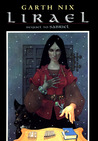
Lirael

Lirael (Abhorsen, #2)Lirael by Garth Nix
My rating: 4 of 5 stars

Lirael is a Sightless misfit amongst the prophetic Clayr, but during her work at the dangerous Library she discovers that her destiny may lay elsewhere; helping the Abhorsen defeat the rise of the Dead.

This is a sequel to Sabriel, set nearly twenty years after the defeat of Kerrigor. We finally get to see the inside of the Clayr's Glacier, where Lirael has grown up as an orphan. She is self-pitying and isolated by her sense of being different - more than anything else, she longs to gain the Sight that will make her a full Clayr.

To keep herself occupied, she takes up a post in the Library, a place so dangerous that Librarians wear whistles and keep clockwork mice in their pockets to call for help. Lirael discovers a talent for Charter Magic and begins uncovering some of the many secrets of her Library. The Library is even cooler than the Abhorsen's House, and it's a setting I wanted to see more of, along with the Clayr's Glacier.

Sabriel and Touchstone are now rulers, with two grown heirs ready to take up their work. At least, until their son Sam is attacked by a powerful necromancer and deeply traumatized by the event. Sam is a perpetual worrywart whose brush with Death made him afraid of his own calling just as an ancient evil is rising to destroy his homeland. It takes Sam and Lirael a long time to connect, but it is clear that they will work together in the next book.

Added to Moggett the cat is the happy-go-lucky Disreputable Dog, who is the perfect friend for a lonely young girl. The depiction of two teenagers who feel anxious about their futures is spot-on, down to the self-pity and self-absorption that slowly gives away to a sense of greater purpose. I think that fans of the Bartimaeus trilogy (starting with The Amulet of Samarkand) would love this book, too. Of course, I'm planning on rereading the final book of the Abhorsen trilogy, Abhorsen.

Quotable:
"The Library was shaped like a nautilus shell, a continuous tunnel that wound down into the mountain in an ever-tightening spiral. This main spiral was an enormously long, twisting ramp that took you from the high reaches of the mountain down past the level of the valley floor, several thousand feet below."

Thursday, October 3, 2013

A Journey Around My Room and A Nocturnal Expedition Around My Room

Journey Around My Room and a Nocturnal Expedition Around My Room (Hesperus Classics)Journey Around My Room and a Nocturnal Expedition Around My Room by Xavier de Maistre
My rating: 5 of 5 stars

This is actually two books in one: both are the playful, tongue-in-cheek musings of a young French soldier confined to small quarters who takes on the style of travel narratives for considerably shorter journeys.

In A Journey Around My Room, de Maistre has been confined to 42 days of house arrest for dueling. But de Maistre knows how to make lemonade out of his lemons: he takes the opportunity to tour his own room as though it were a foreign country. In the introduction Alain de Botton puts it this way: "Wrapped in his dressing gown, satisfied by the confines of his own bedroom, Xavier de Maistre was gently nudging us to try, before taking off for distant hemispheres, to notice what we've already seen."

Making excellent use of his classical education, de Maistre's prose is witty, urbane, sparkling - all those wonderful adjectives I don't get to use often enough when talking about nonfiction (though they always seem to come up with 18th-century French writers). He inspired Marcel Proust and later writers, and it's obvious why. I've added this book to my list of favorites, and look forward to rereading it someday soon.

The second book, A Nocturnal Expedition Around My Room continues the story a few years later. We get to know the fates of Joannetti the servant and Rosine the faithful dog, but we also get another journey into de Maistre's mind as he contemplates the night sky.

As I was reading I was strongly reminded of The Pillow Book of Sei Shōnagon. Written by an eleventh-century Japanese court lady, it has a similar effervescence and beauty - though a markedly different culture informs Shōnagon's writing. I think these two writers would have been a perfect match for each other, could they have met. (In my imaginary dinner party of great writers of the past I'd seat them together.)

De Maistre is an admirer of the satirical masterpiece The Life and Opinions of Tristram Shandy, Gentleman (more commonly called Tristram Shandy) by Lawrence Sterne, so that classic shaggy dog story may be a good fit if you enjoy de Maistre's two journeys.

Quotable:
It's best to let someone like de Maistre speak for himself - from A Journey:
"A nice fire, books, pen; how many resources there are against boredom!"

"When you start to investigate a question, you usually adopt a dogmatic tone since you have secretly already made up your mind [...]; but discussion awakens objections, and everything ends up in doubt."

"Today is the day when certain persons on whom I depend say they will restore me to freedom. As if they had taken freedom from me! As if it had been in their power to deprive me of it for a single moment, and to prevent me from exploring at will the vast space that always lies open before me! - They have forbidden me to roam around a city, a mere point in space; but they have left me with the whole universe: immensity and eternity are mine to command."

from A Nocturnal Expedition:
"And then, who can flatter himself that he will always live with the people he loves? Similar to those swarms of little flies that you see spinning in the air on fine summer evening, men meet by chance and for only a very short time. And they are lucky if, in their rapid movement, they are as skilfull as the flies and don't dash their heads against each other!"

"The horrible emotion of envy has only ever once, on one single occasion, entered my heart, and it was an envy of cranes. I followed them with jealous eyes to the limits of the horizon."

"If we assign limits to creation, however remote those limits may be, the universe appears to me no more than a glowing point in comparison with the immensity of empty space surrounding it, that dark and dreadful void in the midst of which it seems suspended like a solitary lamp."

Wednesday, October 2, 2013

Abaddon's Gate

Jim Holden and a fleet of ships representing the squabbling factions of humanity are headed out to face the mysterious Ring built by the alien protomolecule - if their own conflicts don't destroy them first.

Holden is being haunted by the incoherent ghost of Detective Miller even as he concentrates on holding together the Rocinante's improvised crew family. He has no intention of getting involved, but the universe seems to have other plans for him.

In the meantime we are introduced to a young woman bent on a mission of revenge who joins the crew of a ship making the journey to the Ring, her focus fixed on one man: Jim Holden. A fleet of ships aimed at the Ring carries an interfaith group of religious leaders - but it may also carry humanity's annihilation.

Even as the group of ships converges around the Ring, factions struggle with violence driven by the worst impulses of humanity: arrogance, fear, and obsession. The Ring has the power to alter the laws of physics, and it becomes apparent that the fumbling violence of the fleet could destroy all of humanity by tripping the Ring's defenses.

The action of this book (which is not necessarily the last of the series but does wrap up a few of the mysteries laid out in Leviathan Wakes and Caliban's War) happens mainly on a commandeered generation ship. Formerly owned by Mormons who dreamed of traveling to the stars, the Nauvoo has been rechristened Behemoth and clumsily refitted into a military vessel. It's an appropriate metaphor for the journey of the characters, and of the human race in general. (At one point, realizing that he is headed toward the alien Ring, Holden compares himself to the prophet Jonah by quipping "Off to Ninevah!")

The chief danger confronting our fragile human characters is that of inertia - humans crushed by going too fast and then being brought to an unexpected halt, clever brains moving faster than bodies can handle. Another great metaphor, grounded in the physical realities of zero g space travel.

It's not as compelling as Leviathan, but I enjoy the way Corey grounds each part of the struggle in character. Their relationships to each other matter, and have huge ripple effects on the plot. It's actually an optimistic look at human nature that manages not to ignore all the worst aspects of our kind.

Spoilerish: I was hoping for more info on the gate makers, the civilization that built the protomolecule. Sadly, there's more mutiny and a little less awe and horror than in the first book. Turns out, we're our own worst enemy and we don't need space invaders as an excuse for violence.

Also: Sadly, no Bobbie Draper or Chrisjen Avasarala in this one. I did miss them, and hope they'll show up in another book, since I could see the authors writing more stories in the Expanse universe.

Quotable:
"Too many people with too many agendas, and everyone was worried that the other guy would shoot him in the back."

"It was a lesson he'd never forgotten. That humans only have so much emotional energy. No matter how intense the situation, or how powerful the feelings, it was impossible to maintain a heightened emotional state forever. Eventually you's just get tired and want it to end."

"Show a human a closed door, and no matter how many open doors she finds, she'll be haunted by what might be behind it."

Tuesday, October 1, 2013

Books Read in September

The Life and Times of the Thunderbolt Kid by Bill Bryson - Author Bryson takes us on a humorous trip back into his own 1950s childhood in Des Moines, Iowa: the days of comic books and the Cold War, when Americans were happiest: an era rife with paranoia and optimism in equal measure.

Charles Dickens: A Life by Claire Tomalin - Insightful and authoritative, this biography traces Charles Dickens from his harsh childhood to the heights of literary success and the depths of marital scandal, painting the portrait of an extraordinary man and artist.

Sabriel by Garth Nix - With her powerful necromancer father missing, Sabriel must take on the mantle of Abhorsen and return to her homeland to protect the living from the ravaging Dead.

Crocodile on the Sandbank by Elizabeth Peters - Independent spinster Amelia Peabody and her friend Evelyn Barton-Forbes came to Egypt to view the antiquities - but when they are stalked by a mummy Amelia suspects it may be a non-supernatural ghost from Evelyn's checkered past.

To Your Scattered Bodies Go by Philip José Farmer - What would happen if all of humanity was inexplicably resurrected after death on a vast alien world?

How Reading Changed My Life by Anna Quindlen - Journalist and bibliophile Anna Quindlen recounts her own thoughts and experiences on what it means to live the reading life.

The Fabulous Riverboat by Philip José Farmer - Newly resurrected with all of humanity on an alien planet, Sam Clemens attempts to build a steamboat to find The River's end.

What We Found in the Sofa and How It Saved the World by Henry Clark - When River and his friends discover a rare zucchini-colored crayon in a discarded sofa, they are launched into a fight to save Earth.

Hunting Eichmann by Neal Bascomb - In a thrilling international manhunt, a group of Israeli secret service agents risked everything to bring Nazi war criminal Adolf Eichmann to justice.

Meditations in an Emergency by Frank O'Hara - An influential American poet of the New York School, O'Hara's poetry is at once intimate and abstract.

The Emperor of All Maladies by Siddhartha Mukherjee - In this elegant blend of history and science, a practicing oncologist reveals the hidden history of cancer: a story riddled with painstaking research, leaps of insight, and the seemingly endless instances of human suffering and endurance.

Abaddon's Gate by James S.A. Corey - Jim Holden and a fleet of ships representing the squabbling factions of humanity are headed out to face the mysterious Ring built by the alien protomolecule - if their own conflicts don't destroy them first.

Journey Around My Room and A Nocturnal Expedition Around My Room by Xavier de Maistre - This is actually two books in one: both are the playful, tongue-in-cheek musings of a young French soldier confined to small quarters who takes on the style of travel narratives for considerably shorter journeys.